Antigone is a daughter of Oidipous and Iokaste, sister of Ismene, Eteokles and Polyneikes. In Sophocles’ Oedipus at Colonus she leads her blind father in exile until his death at Kolonos near Athens (paraphrased).
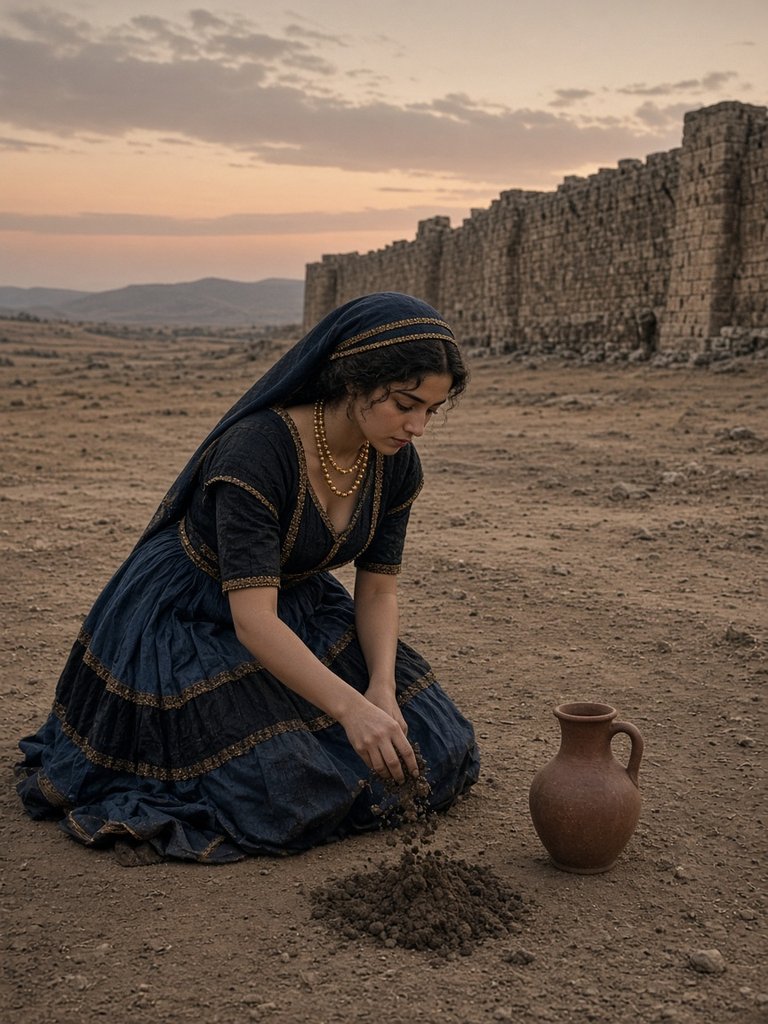
Her brothers killed each other at the seven gates of Thebes. Their uncle Kreon, now king, ordered that Eteokles be buried with honour and Polyneikes, who had led the army against the city, be left unburied. Antigone buried him in defiance of the decree, saying that the unwritten laws of the gods outrank the commands of a king (Sophocles, Antigone 450–470, paraphrased).
Kreon had her shut alive in a rock tomb, where she hanged herself; his son Haimon, who was to marry her, killed himself beside her, and Kreon’s wife Eurydike followed. The seer Teiresias had warned him in vain (Sophocles, Antigone, paraphrased).
Epithets
- Οἰδιπόδεια · Oidipodeia
- daughter of Oidipous
Symbols and virtues
Duty to the dead and to the gods above the law of the city; loyalty to family. Symbols: the handful of dust, the rock tomb.
Myths
- Guide of her blind father. Sophocles, Oedipus at Colonus.
- The burial of Polyneikes. Sophocles, Antigone 1–99, 384–525.
- The rock tomb. Sophocles, Antigone 773–943, 1192–1243.
Sources
Sophocles, Antigone; Oedipus at Colonus; Aeschylus, Seven against Thebes 1005–1078 (all paraphrased).
Quotations in public-domain translations (Evelyn-White 1914, Butler 1898/1900, Taylor 1792); other authors paraphrased.