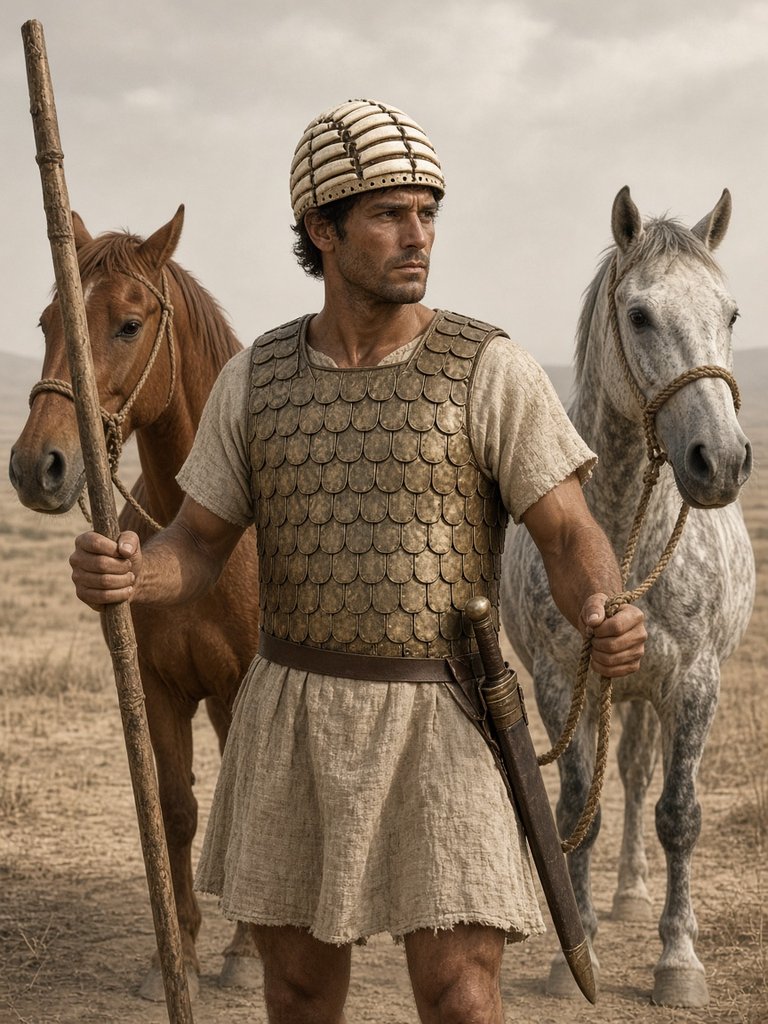
Automedon, son of Diores, was the charioteer and close comrade of Achilles. When Patroklos armed for battle in the armour of Achilles, “He bade Automedon yoke his horses with all speed, for he was the man whom he held in honour next after Achilles, and on whose support in battle he could rely most firmly” (Iliad 16.145–147, tr. Butler). He yoked the immortal horses Xanthos and Balios.
After Patroklos was killed, the horses stood weeping on the battlefield and would not move, until Zeus breathed new strength into them. Automedon drove them back into the fight, killed the Trojan Aretos and defended himself against Hektor and Aineias (Iliad 17.426–542, paraphrased).
He served Achilles at table and helped receive Priam when the old king came to ransom Hektor’s body (Iliad 9.209; 24.474, 24.574–578, paraphrased). Virgil makes him the armour-bearer of Neoptolemos at the sack of Troy (Aeneid 2.476–477), and his name became a byword for a skilful driver.
Epithets
- Διώρεος υἱός · Diōreos huios
- son of Diores (Iliad 17.429)
Symbols and virtues
Loyal service and skill with horses. Symbols: the reins, the immortal horses Xanthos and Balios.
Myths
- Charioteer of Patroklos. Iliad 16.145–154.
- The weeping horses. Iliad 17.426–458.
- Fighting over Patroklos. Iliad 17.459–542.
- Receiving Priam. Iliad 24.474, 24.574–578.
- With Neoptolemos at Troy. Virgil, Aeneid 2.476–477.
In the poets
“He bade Automedon yoke his horses with all speed, for he was the man whom he held in honour next after Achilles, and on whose support in battle he could rely most firmly.”Homer, Iliad 16.145–147, tr. Samuel Butler (1898), public domain.
Sources
Homer, Iliad 9.209, 16.145–154, 16.684, 17.426–542, 19.392–397, 24.474, 24.574–578; Virgil, Aeneid 2.476–477.
Quotations in public-domain translations (Evelyn-White 1914, Butler 1898/1900, Taylor 1792); other authors paraphrased.