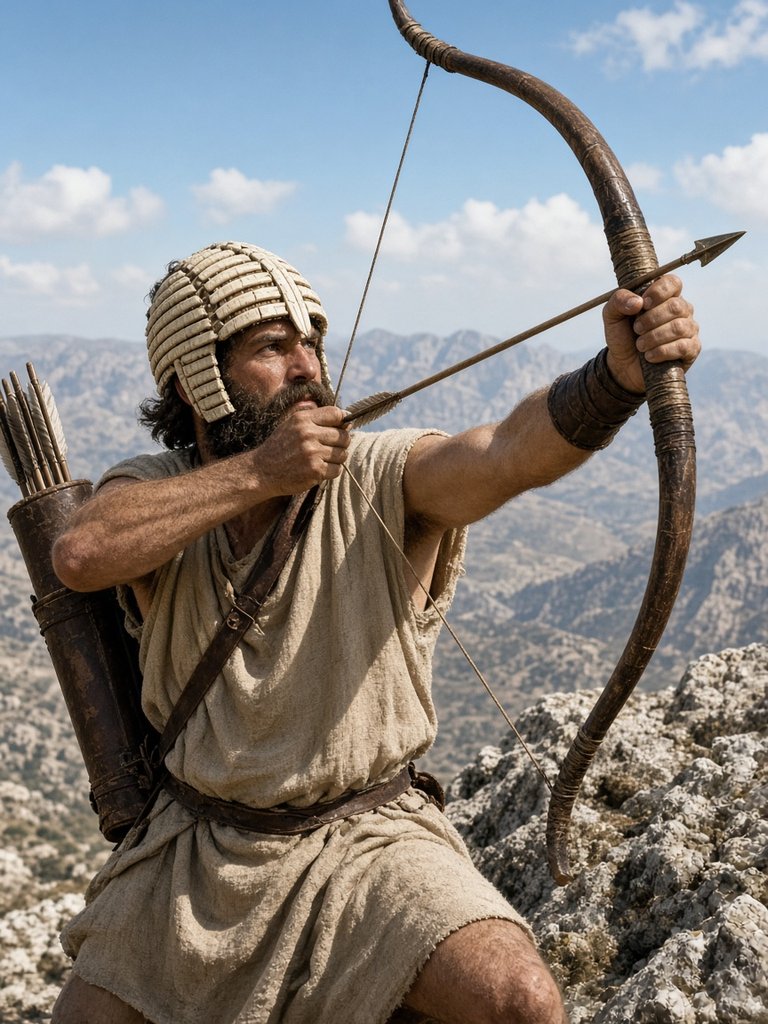
Idas of Messenia, son of Aphareus and brother of Lynkeus, was in Homer’s words the mightiest man then living. Phoinix speaks of his daughter Kleopatra, wife of Meleagros, “daughter of Marpessa daughter of Euenus, and of Ides the man then living. He it was who took his bow and faced King Apollo himself for fair Marpessa’s sake” (Iliad 9.556–560, tr. Butler).
He carried off Marpessa, and when Apollo tried to take her from him, Zeus let her choose; she chose the mortal Idas, fearing the god would leave her when she grew old (Apollodorus 1.7.8–9, paraphrased). He sailed with the Argonauts and hunted the Kalydonian boar (Apollodorus 1.8.2, 1.9.16).
Idas and Lynkeus quarrelled with the Dioskouroi over a herd of cattle. Idas killed Kastor, and Zeus struck Idas down with a thunderbolt (Pindar, Nemean 10.55–72; Apollodorus 3.11.2, paraphrased).
Epithets
- κάρτιστος ἐπιχθονίων · kartistos epichthoniōn
- mightiest of men on earth (Iliad 9.558)
Symbols and virtues
Daring that challenges a god for love. Symbols: the bow, the stolen bride.
Myths
- Facing Apollo. Iliad 9.556–564.
- Marpessa’s choice. Apollodorus 1.7.8–9.
- Argonaut and boar-hunter. Apollodorus 1.8.2, 1.9.16.
- Death by the thunderbolt. Pindar, Nemean 10.55–72.
In the poets
“He it was who took his bow and faced King Apollo himself for fair Marpessa’s sake.”Homer, Iliad 9.558–560, tr. Samuel Butler (1898), public domain.
Sources
Homer, Iliad 9.556–564; Pindar, Nemean 10.55–72; Apollodorus 1.7.8–9, 1.8.2, 1.9.16, 3.11.2; Pausanias 5.18.2.
Quotations in public-domain translations (Evelyn-White 1914, Butler 1898/1900, Taylor 1792); other authors paraphrased.