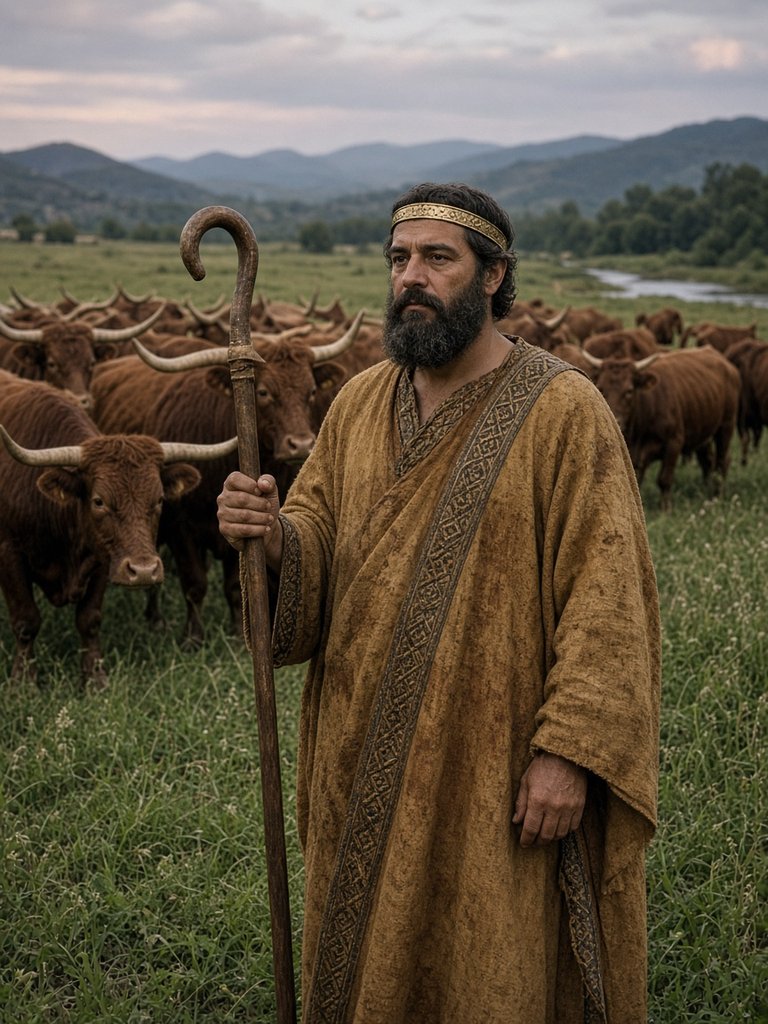
Iphiklos, son of Phylakos, ruled Phylake in Thessaly. The Iliad calls him “Iphiclus, rich in sheep, who was the son of Phylacus”, father of Protesilaos and of Podarkes, who led his people after Protesilaos fell (Iliad 2.704–707, tr. Butler). He is a different man from Iphikles, twin of Herakles.
Neleus would give his daughter Pero only to the man who could drive off the cattle of Iphiklos. The seer Melampous tried, was caught and held prisoner for a year, and was set free when he had expounded the oracles (Odyssey 11.287–297; 15.225–240, paraphrased; Butler spells the name “Iphicles”).
Apollodorus adds that in prison Melampous heard woodworms say the roof beam was nearly eaten through, and that he cured Iphiklos of childlessness by advice he learned from a vulture, winning the cattle as his reward (Apollodorus 1.9.12, paraphrased).
Epithets
- πολύμηλος · polymēlos
- rich in sheep (Iliad 2.705)
Symbols and virtues
Wealth in herds and the cure of a barren house. Symbols: the cattle of Phylake.
Myths
- Father of Protesilaos and Podarkes. Iliad 2.704–707.
- The cattle and Melampous. Odyssey 11.287–297.
- Cured of childlessness. Apollodorus 1.9.12.
In the poets
“Iphiclus, rich in sheep, who was the son of Phylacus.”Homer, Iliad 2.705, tr. Samuel Butler (1898), public domain.
Sources
Homer, Iliad 2.704–707, 13.698; Odyssey 11.287–297, 15.225–240; Apollodorus 1.9.12.
Quotations in public-domain translations (Evelyn-White 1914, Butler 1898/1900, Taylor 1792); other authors paraphrased.