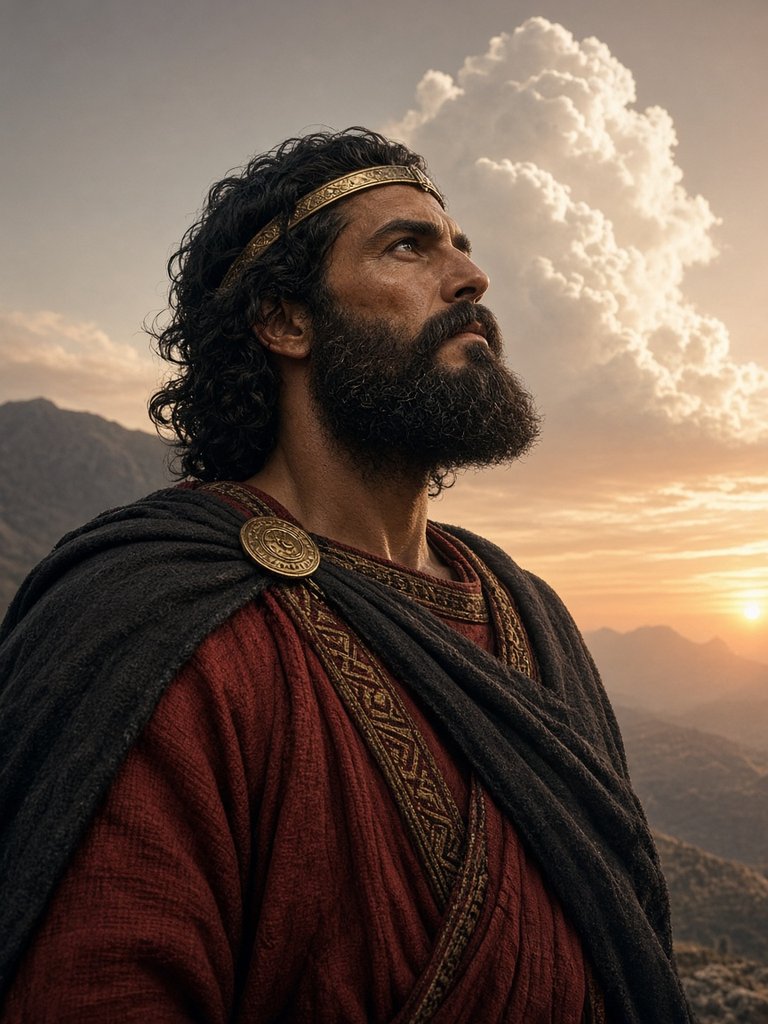
Ixion was a king of the Lapiths in Thessaly. In the Iliad Zeus mentions “the wife of Ixion who bore me Pirithous, peer of gods in counsel” (Iliad 14.317–318, tr. Butler), so that Peirithoos passed as Ixion’s son.
Pindar makes him the first man to shed the blood of kin: he killed his father-in-law by treachery, and no one would purify him until Zeus took pity and brought him among the gods. There he tried to seduce Hera. Zeus shaped a cloud in her likeness, and from Ixion and the cloud was born Kentauros, father of the Centaurs (Pindar, Pythian 2.21–48; Diodorus 4.69.3–5, paraphrased).
For his ingratitude Zeus bound him to a winged, ever-turning wheel, a warning to mortals to repay their benefactors (Pindar, Pythian 2.21–24, paraphrased). Later poets set the wheel in Hades, among the great sinners beside Tantalos and Sisyphos.
Epithets
- τροχός · trochos
- the wheel of his punishment
Symbols and virtues
Ingratitude and lust punished. Symbols: the wheel, the cloud.
Myths
- The wife of Ixion. Iliad 14.317–318.
- The first kin-murder. Pindar, Pythian 2.31–32.
- Hera and the cloud. Pindar, Pythian 2.25–48.
- The wheel. Pindar, Pythian 2.21–24.
In the poets
“The wife of Ixion who bore me Pirithous, peer of gods in counsel.”Homer, Iliad 14.317–318, tr. Samuel Butler (1898), public domain.
Sources
Homer, Iliad 14.317–318; Pindar, Pythian 2.21–48; Diodorus 4.69.3–5; Virgil, Georgics 4.484; Ovid, Metamorphoses 4.461.
Quotations in public-domain translations (Evelyn-White 1914, Butler 1898/1900, Taylor 1792); other authors paraphrased.