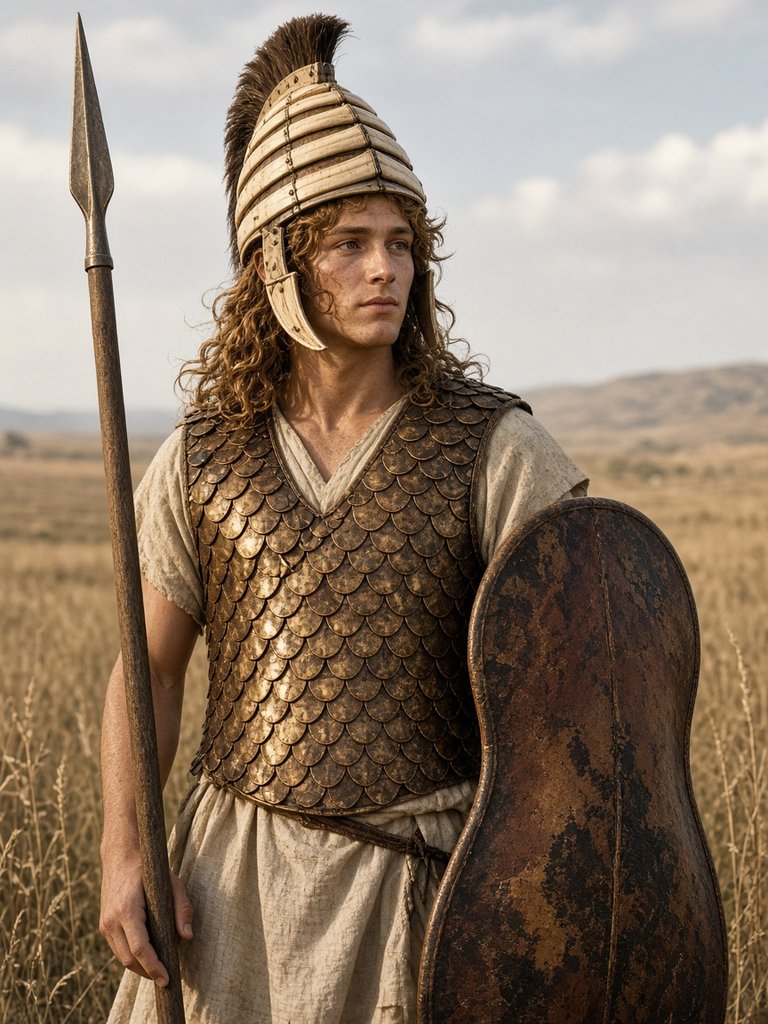
Nireus led three ships from the island of Syme. He was the son of Aglaia and King Charopos, and the Catalogue calls him “the handsomest man that came up under Ilius of all the Danaans after the son of Peleus—but he was a man of no substance, and had but a small following” (Iliad 2.671–675, tr. Butler).
Homer never mentions him again. Later poets said that he fell at Troy to Eurypylos, son of Telephos (Quintus Smyrnaeus, Posthomerica 6, paraphrased).
Epithets
- κάλλιστος ἀνήρ · kallistos anēr
- most handsome man (Iliad 2.673)
Symbols and virtues
Beauty without power. Symbols: the three ships.
Myths
- The three ships from Syme. Iliad 2.671–675.
- Death at Troy. Quintus Smyrnaeus, Posthomerica 6.
In the poets
“Nireus, who was the handsomest man that came up under Ilius of all the Danaans after the son of Peleus.”Homer, Iliad 2.673–674, tr. Samuel Butler (1898), public domain.
Sources
Homer, Iliad 2.671–675; Quintus Smyrnaeus, Posthomerica 6.
Quotations in public-domain translations (Evelyn-White 1914, Butler 1898/1900, Taylor 1792); other authors paraphrased.