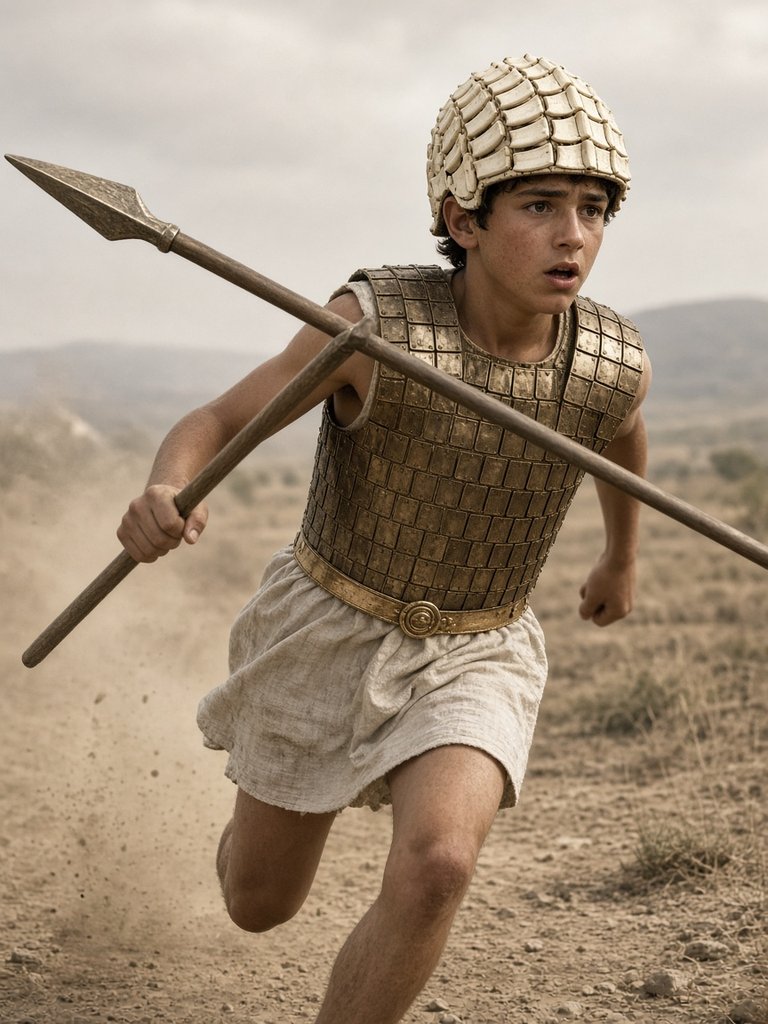
Polydoros was the youngest son of Priam, by Laothoe, and full brother of Lykaon (Iliad 21.84–91, 22.46–48, paraphrased). In the Iliad, “Achilles then went in pursuit of Polydorus son of Priam, whom his father had always forbidden to fight because he was the youngest of his sons, the one he loved best, and the fastest runner” (Iliad 20.407–410, tr. Butler).
Showing off his speed among the front ranks, he was struck in the back by Achilles and killed, and the sight of it drove Hektor to face Achilles (Iliad 20.411–423, paraphrased).
Euripides tells a different story. In the Hecuba Polydoros is the son of Hekabe, sent with gold to the Thracian king Polymestor for safety; when Troy fell, Polymestor murdered him for the gold and threw his body into the sea. His ghost speaks the prologue, and Hekabe takes vengeance by blinding Polymestor (Hecuba 1–58, 1035–1055, paraphrased). Virgil makes his grave a myrtle that bleeds when Aeneas breaks its branches (Aeneid 3.19–68, paraphrased).
Epithets
- Πριαμίδης · Priamidēs
- son of Priam
Symbols and virtues
The youngest and best-loved son, and the betrayal of a guest. Symbols: swift feet, the bleeding myrtle.
Myths
- Killed by Achilles. Iliad 20.407–423.
- Brother of Lykaon. Iliad 21.84–91, 22.46–48.
- Murdered by Polymestor. Euripides, Hecuba 1–58.
- The bleeding myrtle. Virgil, Aeneid 3.19–68.
In the poets
“Achilles then went in pursuit of Polydorus son of Priam, whom his father had always forbidden to fight because he was the youngest of his sons, the one he loved best, and the fastest runner.”Homer, Iliad 20.407–410, tr. Samuel Butler (1898), public domain.
Sources
Homer, Iliad 20.407–423, 21.84–91, 22.46–48; Euripides, Hecuba; Virgil, Aeneid 3.19–68; Ovid, Metamorphoses 13.429–438, 13.536–575.
Quotations in public-domain translations (Evelyn-White 1914, Butler 1898/1900, Taylor 1792); other authors paraphrased.