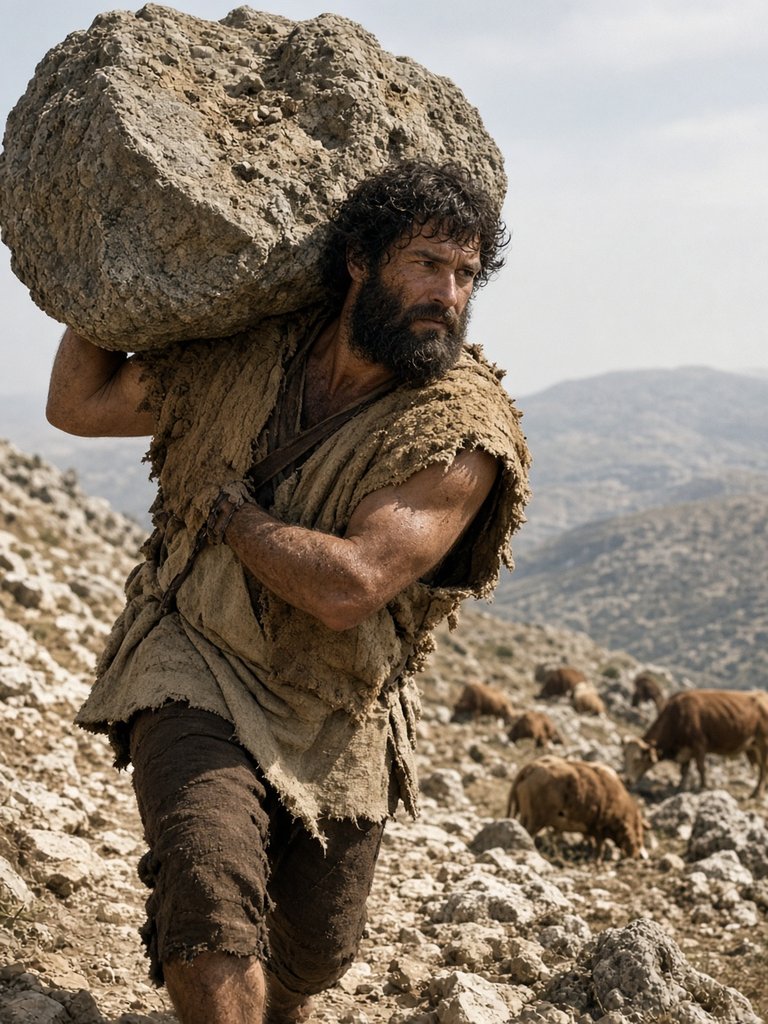
Zethos is the twin of Amphion, son of Zeus and Antiope. The Odyssey says the brothers founded seven-gated Thebes and walled it, “for strong though they were they could not hold Thebes till they had walled it” (Odyssey 11.263–265, tr. Butler).
Raised by a herdsman on Kithairon, Zethos became a herdsman himself, devoted to cattle and hard work, while his brother loved music; their argument over the active and the contemplative life was famous from Euripides’ lost Antiope (Plato, Gorgias 485e–486c; Apollodorus 3.5.5, paraphrased). Together they avenged their mother on Lykos and Dirke and took Thebes.
Apollonius describes the scene: Zethos heaving a mountain peak onto his shoulders, while the rock followed Amphion’s lyre (Argonautica 1.735–741, paraphrased). He married Thebe, who gave the city its name (Apollodorus 3.5.6). In Penelope’s simile in the Odyssey, the nightingale, daughter of Pandareus, mourns her child Itylus, “son of king Zethus”, whom she killed by mishap (Odyssey 19.518–523, tr. Butler).
Epithets
- Ζῆθος · Zēthos
- Zethus
Symbols and virtues
Strength, labour and the practical life. Symbols: the herdsman’s staff, the stones carried on his back.
Myths
- Founder of Thebes with Amphion. Odyssey 11.260–265.
- The herdsman twin. Apollodorus 3.5.5; Plato, Gorgias 485e–486c.
- Carrying the stones. Apollonius, Argonautica 1.735–741.
- Husband of Thebe. Apollodorus 3.5.6.
- Father of Itylus. Odyssey 19.518–523.
Cult and places
- Thebes. Shared tomb with Amphion outside the city (Pausanias 9.17.4–7).
In the poets
“For strong though they were they could not hold Thebes till they had walled it.”Homer, Odyssey 11.264–265, tr. Samuel Butler (1900), public domain.
Sources
Homer, Odyssey 11.260–265, 19.518–523; Plato, Gorgias 485e–486c; Apollonius, Argonautica 1.735–741; Apollodorus 3.5.5–6; Pausanias 9.5.6–9, 9.17.4–7.
Quotations in public-domain translations (Evelyn-White 1914, Butler 1898/1900, Taylor 1792); other authors paraphrased.