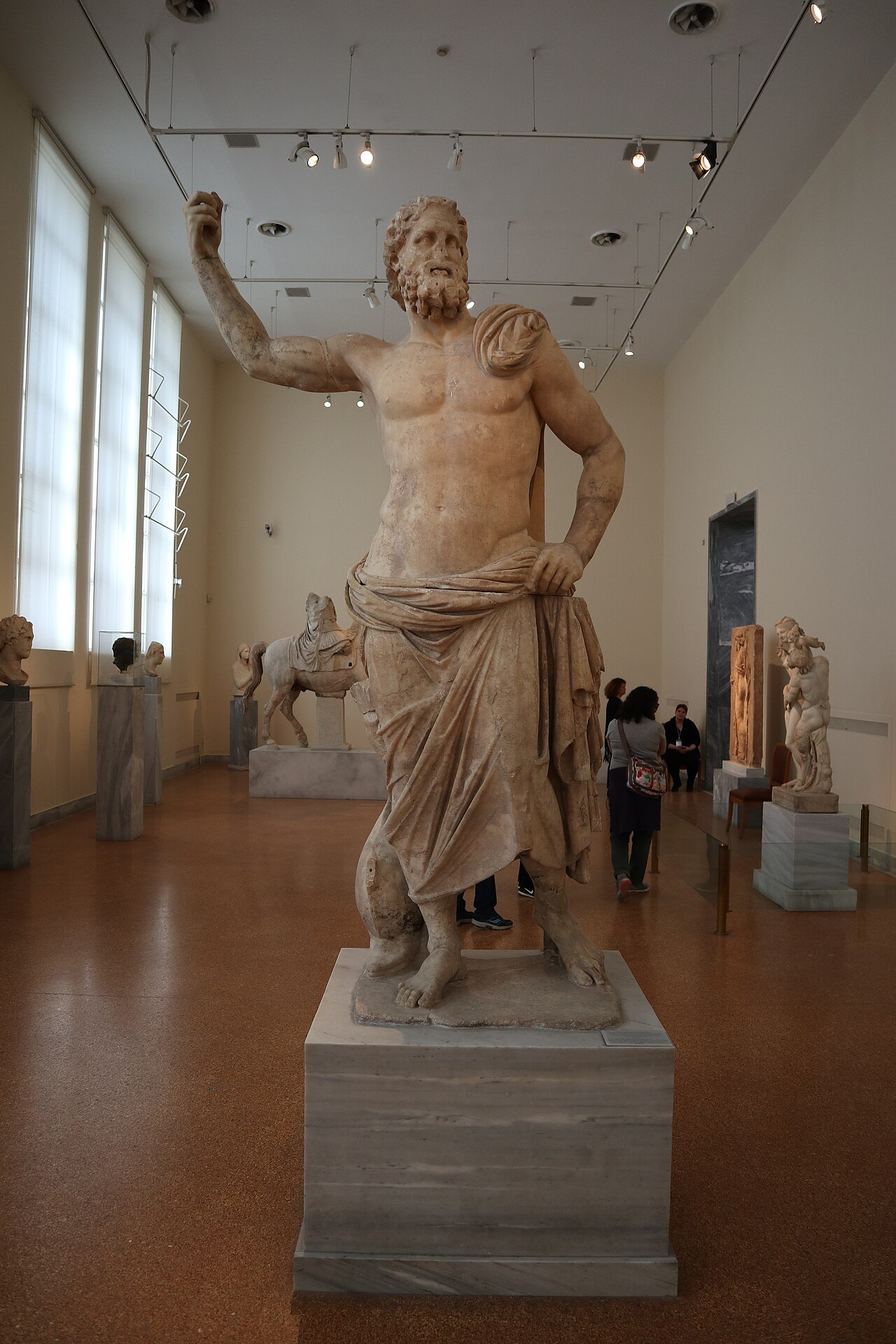
George E. Koronaios, CC0, via Wikimedia Commons

Poseidon, brother of Zeus, received the grey sea as his share of the world. He shakes the earth, raises and calms storms, and gave horses to mortals. Sailors prayed to him for safe passage, and his temples stood on headlands and isthmuses where sea meets land.
Epithets
- Ἐνοσίχθων · Enosichthon
- earth-shaker
- Γαιήοχος · Gaieochos
- holder of the earth
- Κυανοχαίτης · Kyanochaites
- dark-haired
- Ἵππιος · Hippios
- of horses
- Ἀσφάλειος · Asphaleios
- the securer, who keeps the ground steady
- Πελάγιος · Pelagios
- of the open sea
- Ἑλικώνιος · Helikonios
- of Helike, his sanctuary in Achaea (Iliad 8.203)
- Ἴσθμιος · Isthmios
- of the Isthmus of Corinth
Myths
- The lot of the sea. Poseidon reminds Iris that the sea fell to him by lot when the three sons of Kronos divided the world (Iliad 15.187–193).
- The contest for Attica. Poseidon struck the rock of the Acropolis with his trident and brought forth a sea-spring, but the land was awarded to Athena for her olive (Herodotus 8.55; Apollodorus 3.14.1).
- The walls of Troy. With Apollo he served Laomedon for a year and built the walls of Troy, and was cheated of his wages (Iliad 21.441–457).
- The wrath against Odysseus. Angered by the blinding of his son Polyphemos, Poseidon kept Odysseus from home for years (Odyssey 1.68–75).
Cult sites
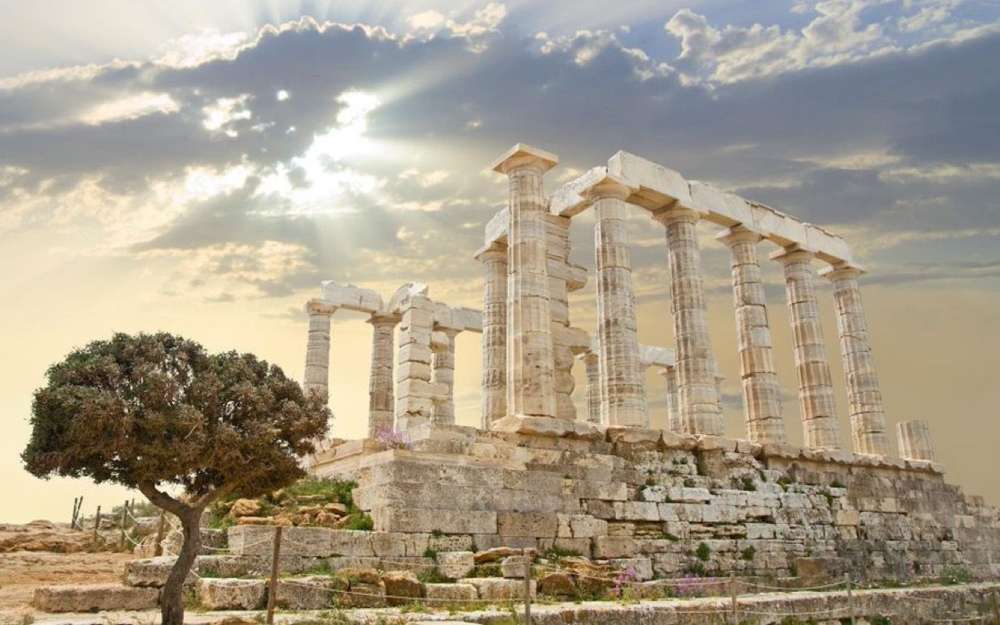
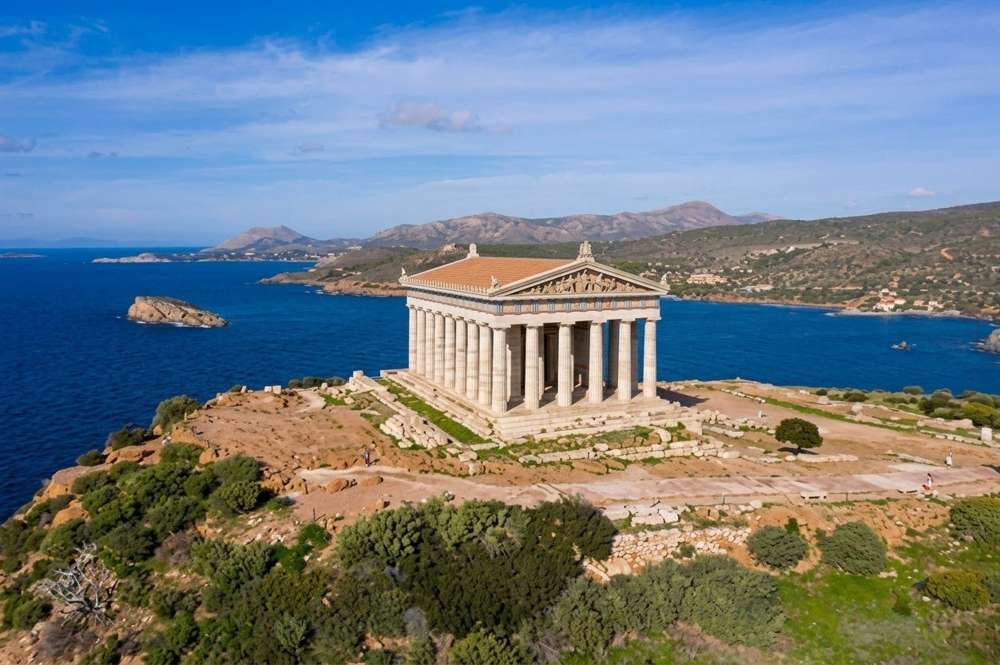
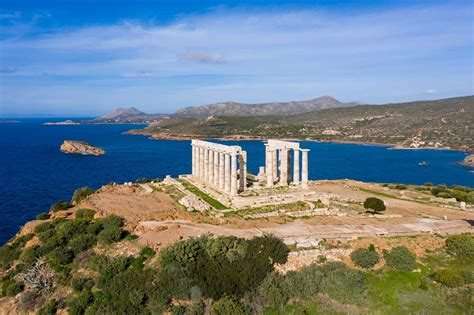
- Sounion. The marble Doric temple on the cape at the tip of Attica, built in the 440s BC, a landmark for every ship rounding the headland.
- Isthmia. His sanctuary on the Isthmus of Corinth, home of the Isthmian Games (Pausanias 2.1.7–2.2.1).
- Tainaron. The sanctuary at the southern cape of Laconia, an asylum whose violation by the Spartans was remembered as a curse (Thucydides 1.128.1; Pausanias 3.25.4).
- Kalaureia. The sanctuary on Poros, centre of an ancient league of cities, where Demosthenes took his life (Strabo 8.6.14; Plutarch, Demosthenes 29).
Festivals
- Isthmian Games. Held every second year at the Isthmus in his honour.
- Posideia. His festival in Poseideon, the Attic month named for him.
- Sacrifice at Pylos. Telemachus found the Pylians on the shore sacrificing black bulls to the dark-haired Earth-shaker (Odyssey 3.5–8).
Offerings
Black bulls are the Homeric sacrifice to Poseidon (Odyssey 3.6). In the Argolid, bridled horses were once drowned in his honour at the freshwater spring called Dine that rises in the sea (Pausanias 8.7.2). Sailors pour libations to him before setting out and on making harbour.
Further epithets
- Ἐννοσίγαιος · Ennosigaios
- earth-shaker (Iliad 7.455 and often)
- Φυτάλμιος · Phytalmios
- nourisher of plants, honoured at Troizen (Pausanias 2.32.8)
Birth and the primary sources
Poseidon is a son of Kronos and Rhea, swallowed with his siblings and brought back up when Kronos was overcome (Theogony 453–500; see the Theogony page). When the three brothers shared the world by lot he received the grey sea for his home (Iliad 15.187–193). In the same passage he refuses to bow to Zeus as a master: "Let him stay quiet in his third share, mighty as he is" (15.194–195).
Homer describes his journey to Troy: he strides down from Samothrace in three steps and a fourth, harnesses his bronze-hoofed, golden-maned horses at his palace in the depths at Aigai, and drives over the waves while sea-beasts play beneath him and the sea parts in joy (Iliad 13.17–31). In the Odyssey his anger drives the whole poem: Odysseus blinded his son the Cyclops Polyphemos, and the god pursues him over the sea until he reaches the Phaiakians, whose ship Poseidon turns to stone on its return (Odyssey 1.68–75; 9.526–535; 13.159–164). The Iliad also tells how Poseidon and Apollo built the walls of Troy for King Laomedon, who cheated them of their wage (Iliad 21.441–457).
Herodotus and Apollodorus tell his strife with Athena for Attica: Poseidon struck the rock of the Acropolis with his trident and brought up a well of sea water, Athena planted the olive, and the judges gave the land to her (Herodotus 8.55; Apollodorus 3.14.1). His wife is Amphitrite, daughter of Nereus, mother of Triton (Theogony 930–933). Pindar tells of Pelops, whom Poseidon loved and to whom he gave a golden chariot with winged horses to win Hippodameia (Olympian 1.71–87). By Demeter in the form of a mare he fathered the horse Areion (Pausanias 8.25.5), and by Medusa the winged Pegasos (Theogony 278–281). Bacchylides sings of the young Theseus diving into the sea to his father's palace, where Amphitrite gave him a purple robe and a crown (Bacchylides 17).
Domains and symbols
Poseidon holds the sea, its storms and calm, the rivers and springs that rise from below, and the earthquake. He is lord of horses and of the bull, and the tamer of both. His emblem is the trident, with which he stirs the deep and strikes out springs. His creatures are the horse, the bull, the dolphin and the tunny; the pine is his tree, and the Isthmian victors were crowned with pine or celery. His sacrifices were black bulls, slaughtered on the shore in Pylos when Telemachos arrived (Odyssey 3.5–8), and horses drowned in the sea for him.
Sanctuaries and cults
- Isthmia. His sanctuary at the Isthmus of Corinth, home of the Isthmian Games held every second year in his honour, which Pindar and Bacchylides celebrated in their odes.
- Sounion. His marble temple on the Attic headland, shown below, where the Athenians held a festival every fourth year with a boat race (Herodotus 6.87).
- Kalaureia. The island sanctuary at modern Poros, centre of an ancient league of cities, where Demosthenes took refuge and died (Plutarch, Demosthenes 29).
- The Erechtheion. On the Acropolis he shared the temple with Erechtheus, and the mark of his trident and the salt well were shown there (Pausanias 1.26.5).
- Onchestos. A grove in Boeotia where a driver let his horses run free with the empty chariot; the Homeric Hymn to Apollo describes the custom (230–238).
In Attica the month Poseideon bore his name, the month of winter storms; the Poseidea were held in it, and the Haloa of Demeter fell on the 26th. Athens kept a second Poseideon in years needing an extra month.
Statues and art
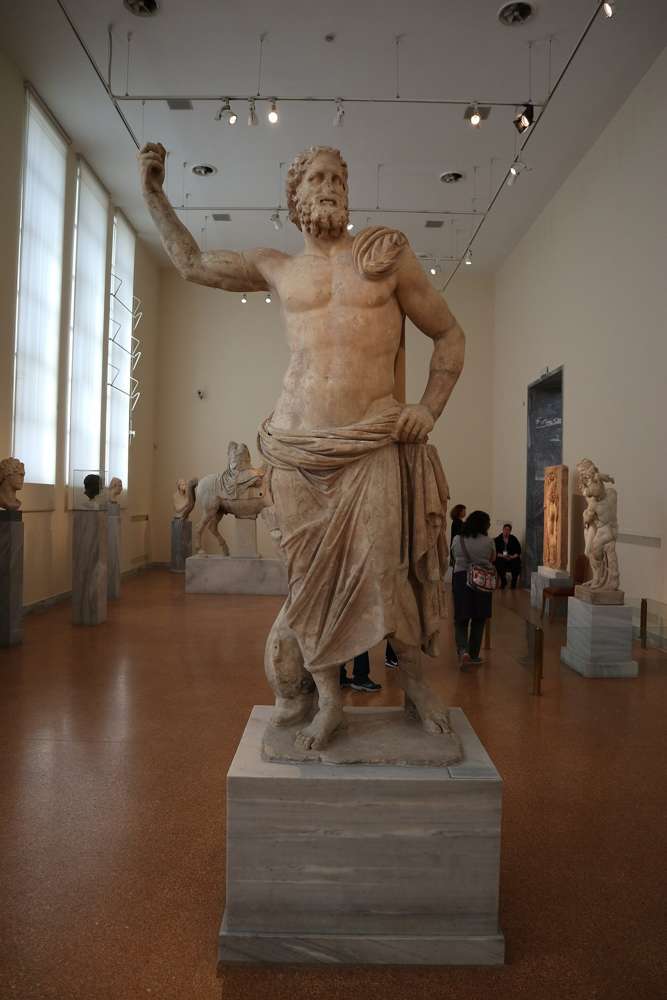
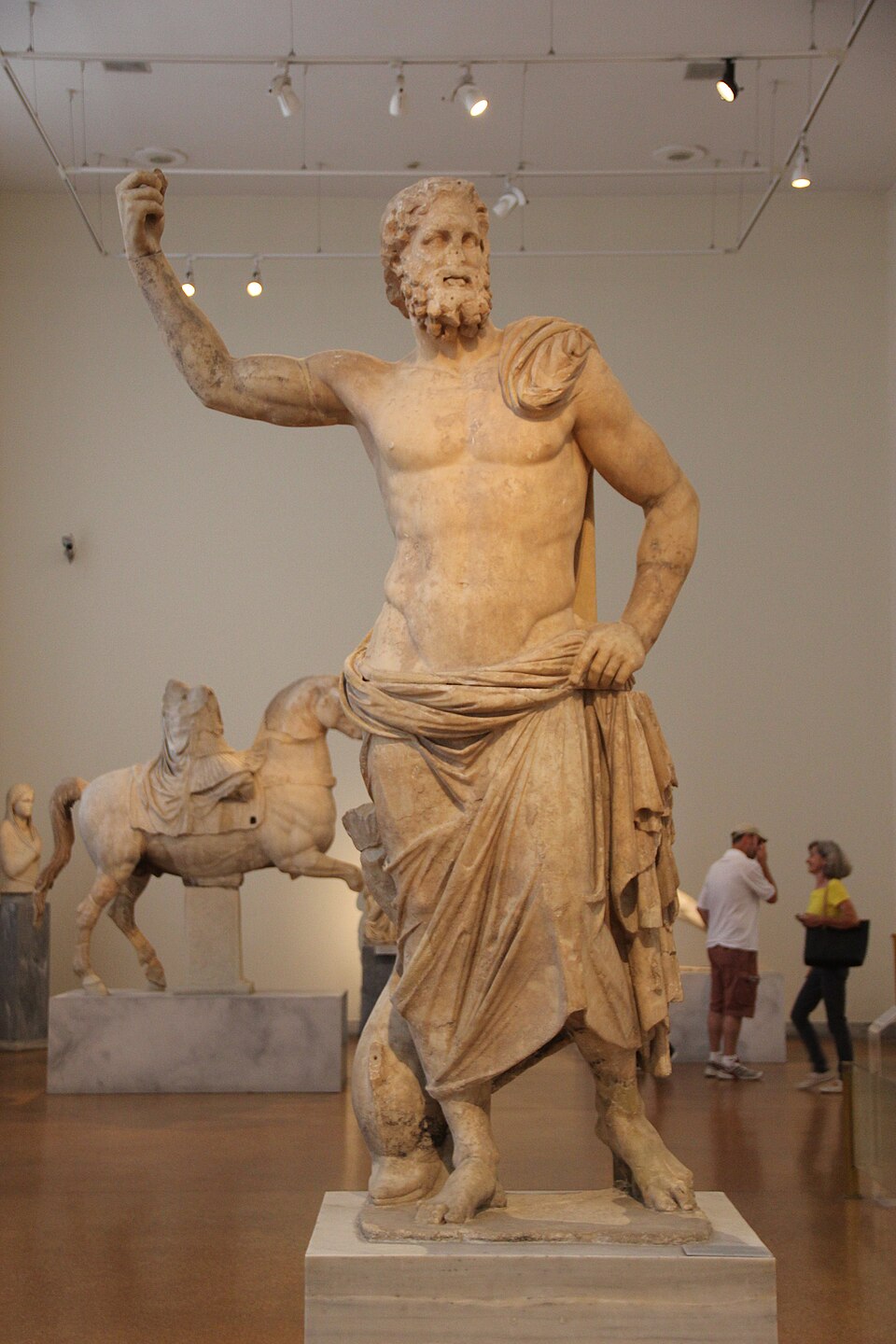
On the west pediment of the Parthenon Poseidon and Athena strove at the centre, he rearing back with the trident, she with the olive; Pausanias records the subject (1.24.5). At Isthmia, Pausanias saw bronze statues of Poseidon and Amphitrite on a chariot drawn by four gilded horses with tritons of ivory (2.1.7–8). The Corinthian painted tablets from Penteskouphia, dedicated by potters, show him again and again with trident and horse. The Poseidon of Melos in Athens stands in the Hellenistic heroic pose, and Roman mosaics from Pompeii show his wedding chariot with Amphitrite. In the Baroque, Nicola Salvi's Trevi Fountain set the sea-god, Roman Neptune, above his tritons and sea-horses.
Beneath the Divine Mind
Poseidon is the Divine Mind as depth and motion: the restless power that moves beneath the surface of things and shakes what seems fixed, fractured off, personified and deified as lord of sea and earthquake. He answers to the One as every god does; see The One and the Many. He still acts in human affairs wherever sailors put to sea, horses are trained, or a sudden upheaval tests a people's foundations.
Honouring Poseidon today
- By the sea. Pour wine into the sea from the shore or the deck of a boat, as Telemachos found the Pylians doing. Sea water and salt purify his altar.
- Offerings. Wine, barley, a figure of a horse or bull, and incense of myrrh suit him. A sailor's prayer before departure is to Poseidon Asphaleios.
- The month. Keep the Poseidea in Poseideon, the Attic midwinter month, and pray to Poseidon Phytalmios for springs and gardens at sowing.
- Hymn. Recite the Homeric Hymn and the Orphic Hymn above.
Hymn
I begin to sing about Poseidon, the great god, mover of the earth and fruitless sea, god of the deep who is also lord of Helicon and wide Aegae. A two-fold office the gods allotted you, O Shaker of the Earth, to be a tamer of horses and a saviour of ships! Hail, Poseidon, Holder of the Earth, dark-haired lord! O blessed one, be kindly in heart and help those who voyage in ships!Homeric Hymn 22, To Poseidon. Homeric Hymns, tr. H. G. Evelyn-White (1914), public domain.
Orphic Hymn XVII · To Poseidon
Κλῦθι, Ποσείδαον γαιήοχε, κυανοχαῖτα …
Hear, Poseidon (Neptune), ruler of the sea profound,
English translation by Thomas Taylor, 1792. Taylor used the Roman name; the temple gives the Greek.
Whose liquid grasp begirts the solid ground;
Who, at the bottom of the stormy main,
Dark and deep-bosom'd, hold'st thy wat'ry reign …
The Hymn to Poseidon is sung in a setting composed by the temple's founder. Listen in the Hemera app.
Kymopoleia Κυμοπόλεια
“Wave-ranger”, daughter of Poseidon, bride of Briareos · Roman: Cymopolea
Kymopoleia, “she who ranges the waves”, is a daughter of Poseidon. Hesiod tells that after the war with the Titans the Hundred-Handers were made guardians of Tartaros, “but Briareos, being goodly, the deep-roaring Earth-Shaker made his son-in-law, giving him Cymopolea his daughter to wed” (Theogony 817–819).
Briareos, whom gods call Briareos and men Aigaion (Iliad 1.403–404, paraphrased), was the Hundred-Hander whom Thetis summoned to Olympos to protect Zeus from the plot of Hera, Poseidon and Athena (Iliad 1.396–406, paraphrased). By the marriage Poseidon bound the mightiest of the Hundred-Handers to the sea. Hesiod is our only early source for Kymopoleia herself; her name marks her as a goddess of the moving waves.
Epithets: Κυμοπόλεια · Kymopoleia (wave-ranger)
Domains and symbols: The ranging waves, the sea’s strength bound by marriage. Admire: loyalty, the joining of strength to order. Sacred symbols: the wave, the storm.
Myths:
- Daughter of Poseidon. Theogony 817–819.
- Bride of Briareos. Theogony 817–819.
“But the glorious allies of loud-crashing Zeus have their dwelling upon Ocean’s foundations, even Cottus and Gyes; but Briareos, being goodly, the deep-roaring Earth-Shaker made his son-in-law, giving him Cymopolea his daughter to wed.”Hesiod, Theogony 815–819, tr. H. G. Evelyn-White (1914), public domain. There is no Homeric or Orphic hymn to Kymopoleia.
Sources: Hesiod, Theogony 815–819; Homer, Iliad 1.396–406. Ancient sources are cited by book and line or section in the standard numbering. Quotations from Hesiod and the Homeric Hymns are in the translation of H. G. Evelyn-White (1914), from Homer in the prose of Samuel Butler (Iliad 1898, Odyssey 1900), from the Orphic Hymns in that of Thomas Taylor (1792), all public domain; other ancient authors are paraphrased. Hemera gives each day's god in brief; this page is the temple's fuller account.
Images
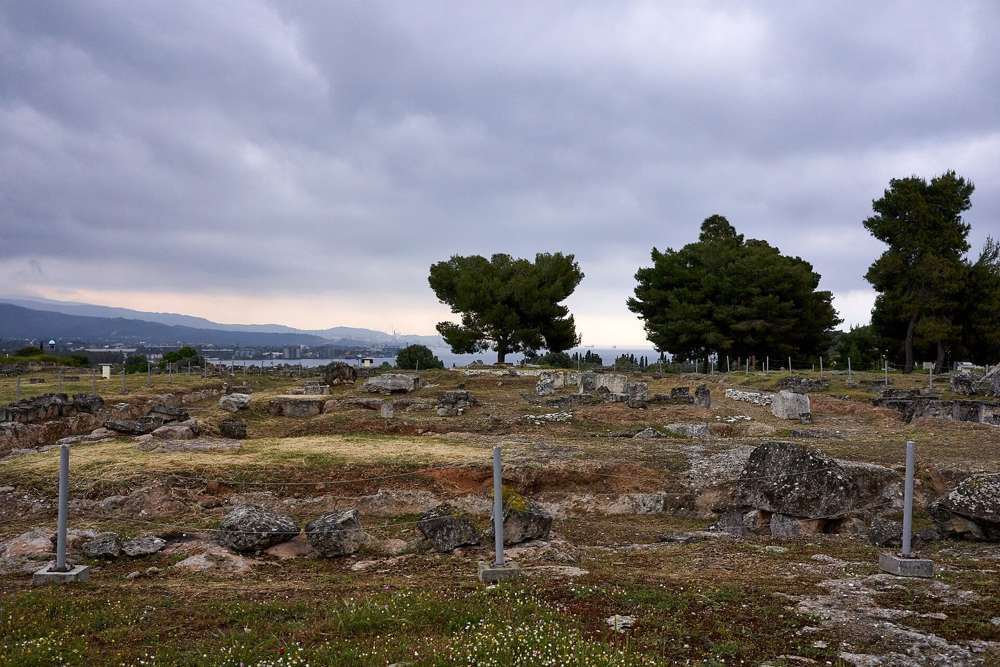
George E. Koronaios, CC0, via Wikimedia Commons

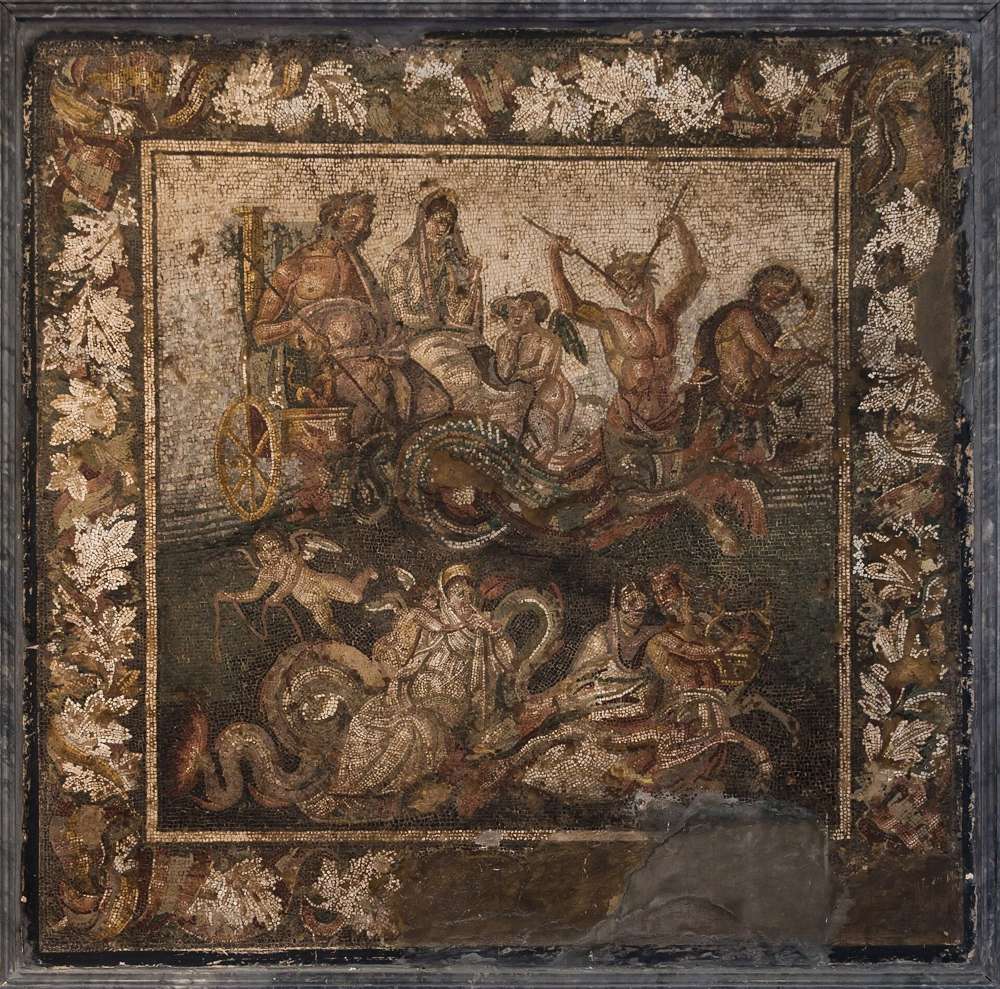
Jebulon, Public domain, via Wikimedia Commons

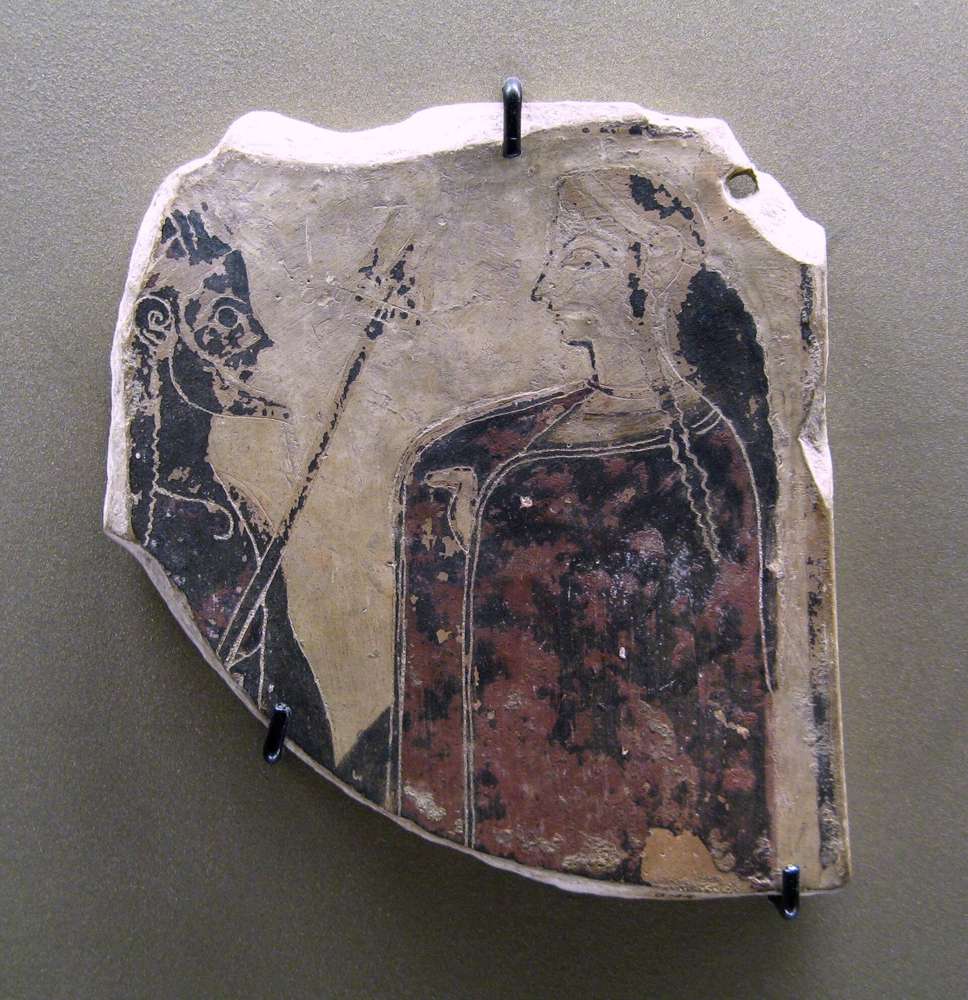
Mark Landon, Public domain, via Wikimedia Commons

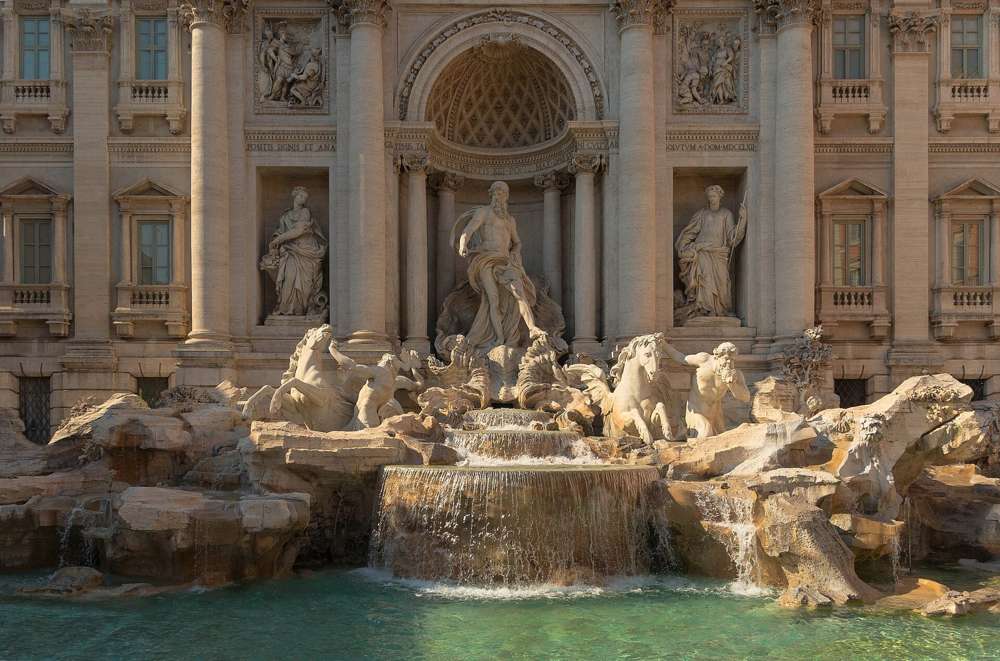
Jebulon, CC0, via Wikimedia Commons

Gary Todd, CC0, via Wikimedia Commons

Sources
Homer, Iliad 13, 15 and 21, and Odyssey 1, 3, 9 and 13; Hesiod, Theogony; Homeric Hymn to Apollo; Pindar, Olympian 1; Bacchylides 17; Sophocles, Oedipus at Colonus; Herodotus 1.148, 6.87 and 8.55; Apollodorus, Library 3.14; Pausanias 1.24–26, 2.1, 2.32, 7.21 and 8.25; Plutarch, Demosthenes.
Quotations in public-domain translations (Evelyn-White 1914, Butler 1898/1900, Taylor 1792); other authors paraphrased.